The Science and History of Time: How Humanity Learned to Measure the Universe

The Science and History of Time

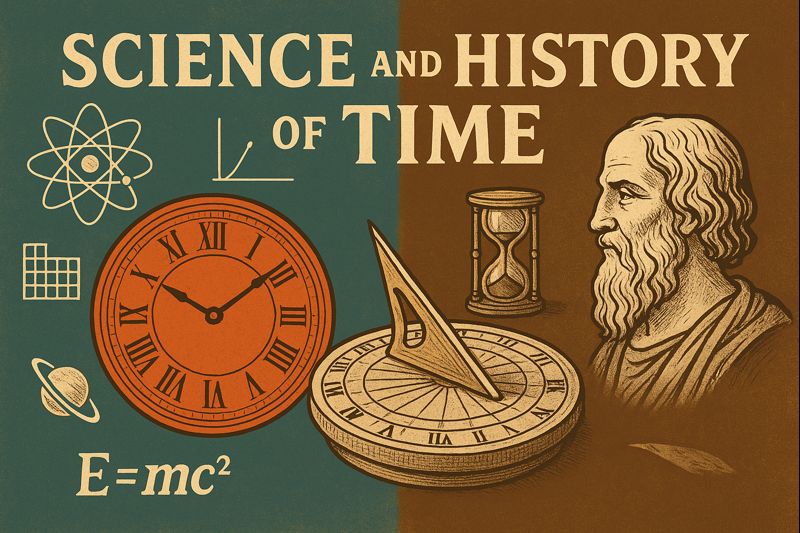
Time is everywhere—guiding our schedules, shaping our memories, and defining our universe. Yet, despite its constant presence, time remains one of the most complex and fascinating concepts ever studied. From ancient civilizations watching the sun’s shadow to modern scientists measuring atomic vibrations, humanity’s understanding of time has evolved dramatically. The science and history of time reveal not only how we measure moments but also how time influences physics, culture, and human perception itself.

This article explores how time was understood in ancient civilizations, how scientific discoveries transformed its meaning, and how modern technology continues to refine our measurement of it.

Early Human Perception of Time

Before clocks existed, humans relied on natural patterns to understand time. Sunrise and sunset defined the day, while the moon’s phases shaped months. Seasonal changes guided farming, migration, and survival.

Time during this era was event-based, not numerical. A task was completed when the sun reached a certain position or when a season changed. Many ancient societies believed time was cyclical, repeating endlessly through birth, death, and renewal.

The Birth of Calendars and Timekeeping Systems

Ancient Mesopotamia and Egypt

Mesopotamians developed a mathematical approach to time, dividing hours into 60 minutes—a system still used today. Egyptians created sundials and water clocks and established a 365-day calendar based on the Nile’s flooding cycle.

Time in Ancient India and China

Ancient Indian texts described vast cosmic time cycles, reflecting a philosophical view of creation and destruction. In China, calendars combined astronomy with governance, helping rulers plan agriculture and rituals accurately.

Philosophical Views on Time

Greek philosophers laid the foundation for abstract thinking about time.

  • Plato viewed time as a reflection of eternity

  • Aristotle described time as a measure of change and motion

These ideas influenced scientific and philosophical thought for centuries.

Mechanical Clocks and the Control of Time

The invention of mechanical clocks in medieval Europe changed society forever. Time became measurable, predictable, and shared. Town clocks regulated work hours, trade, and religious life.

During the Industrial Revolution, time transformed into a commodity. Punctuality, schedules, and productivity became essential, shaping the modern world.

Newton’s Absolute Time

Sir Isaac Newton introduced the idea of absolute time, flowing uniformly regardless of events. This concept supported classical physics and allowed scientists to calculate motion and forces accurately for centuries.

Einstein and the Science of Relativity

Albert Einstein revolutionized time through his theories of relativity.

Time Dilation

Time slows down at high speeds and near massive objects. This is not theory alone—GPS satellites must account for time dilation to work correctly.

Space-Time Continuum

Einstein merged space and time into a single structure called space-time, showing that time is flexible, not fixed.

The Arrow of Time and Entropy

Why does time move forward? Physics explains this through entropy, which always increases. This creates the arrow of time, explaining why events cannot reverse naturally.

Time at the Quantum Level

Quantum physics challenges traditional ideas of time. Some theories suggest time may emerge from deeper processes rather than exist as a fundamental element. This remains one of the biggest mysteries in modern science.

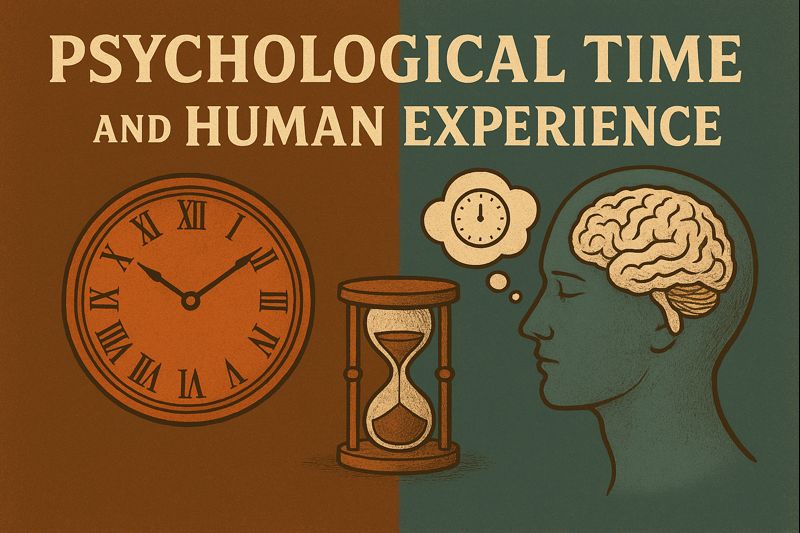
Psychological Time and Human Experience

Psychological Time and Human Experience

Humans experience time emotionally and mentally.

  • Time feels slow during stress

  • Time flies during enjoyment

  • Memories distort time perception

Culture also influences how people value punctuality, deadlines, and schedules.

Atomic Clocks and Modern Time Measurement

Atomic clocks measure time using atomic vibrations, forming the basis of Coordinated Universal Time (UTC). These clocks power navigation systems, global communication, and online time tools like vclock.in.

Time in the Digital Age

Technology has made time more precise but also more demanding. Instant notifications and automation have compressed our sense of time, making effective time awareness more important than ever.

Conclusion

The science and history of time reveal humanity’s endless effort to understand existence itself. From observing the sky to building atomic clocks, time has shaped civilization, science, and personal life. While we can measure time with incredible accuracy, its true meaning lies in how we choose to use it.

FAQs

What is time in science?

Time in science is a measurable dimension that orders events and allows change to be observed and analyzed.

Who invented timekeeping?

Timekeeping evolved gradually, beginning with ancient civilizations like Mesopotamia and Egypt.

How do atomic clocks work?

Atomic clocks measure time using vibrations of atoms, making them the most accurate timekeeping devices.

Why does time move forward?

Time moves forward due to increasing entropy, known as the arrow of time.

What is UTC time?

UTC (Coordinated Universal Time) is the global time standard used worldwide.

Scroll to Top