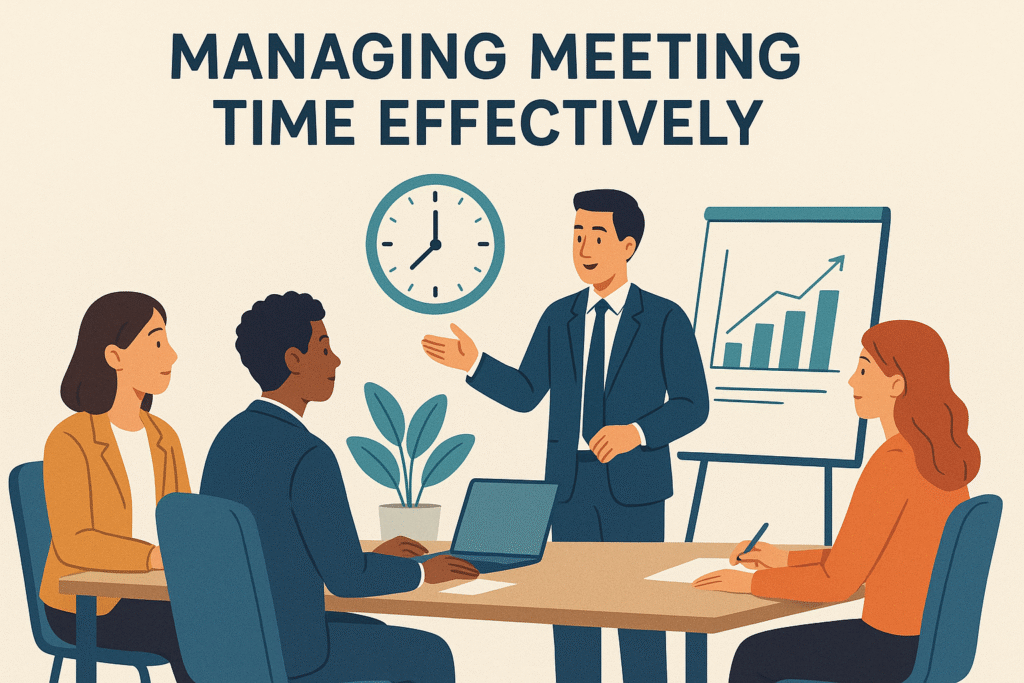
Managing Meeting Time Effectively: Tips and Timer Strategies
Meetings are essential for collaboration, planning, strategy, and decision-making—but they can also become major productivity killers if not managed properly. According to workplace studies worldwide, professionals spend up to one-third of their workweek attending meetings. Unfortunately, many of those meetings run too long, go off-topic, or fail to produce actionable outcomes.
The good news? With practical planning, smart time-management techniques, and simple digital tools like timers, meetings can become significantly more efficient. Whether you’re a team leader, manager, business owner, educator, or remote worker, mastering meeting-time management can dramatically improve your productivity and reduce stress.
In this detailed guide, we’ll explore effective ways to manage meeting time, why timers are incredibly powerful, and practical strategies you can start using today.

Why Effective Meeting Time Management Matters
Poorly managed meetings drain more than just time—they drain energy, motivation, and focus. Here’s why improving your meeting structure matters:
1. Increased Productivity
Efficient meetings allow teams to spend more time actually doing the work instead of talking about it.
2. Clearer Communication
Shorter, well-structured meetings force participants to communicate concisely and stay focused on priorities.
3. Better Engagement
When people know their time is respected, they are more active and attentive.
4. Reduced Stress
Long, unproductive meetings can create mental fatigue. Smart time-control reduces meeting burnout.
5. Higher ROI (Return on Time Invested)
Every minute spent in a meeting has a cost. Time-efficient meetings mean higher value per minute.
Tips for Managing Meeting Time Effectively
To make meetings more focused and efficient, follow these proven strategies
1. Define the Purpose of the Meeting Clearly
Many time-wasting meetings happen for only one reason: the objective is unclear. Before scheduling, ask:
What is the primary goal?
Is a meeting necessary, or can this be resolved through email, a shared document, or messaging?
What decisions need to be made?
A meeting without a clear purpose is guaranteed to run long.
2. Prepare a Time-Structured Agenda
A meeting agenda acts as a roadmap—and the more time-bound it is, the better.
A well-structured agenda should include:
The meeting objective
Discussion topics
Time allocated for each topic
Person responsible for leading each section
Estimated overall meeting duration
For example:
| Agenda Item | Owner | Time |
|---|---|---|
| Project updates | Sarah | 10 minutes |
| Discuss challenges | Entire team | 15 minutes |
| Assign action items | John | 5 minutes |
This ensures everyone knows what to expect and how long they have to contribute.
3. Start the Meeting on Time—Every Time
Late starts are one of the most common time-wasters.
If the meeting starts even five minutes late:
People assume punctuality isn’t important
Time pressure decreases
Discussion expands unnecessarily
One powerful trick is using a countdown timer visible on the screen before the meeting begins. This creates urgency and encourages everyone to join promptly.
4. Limit Meeting Length
Research shows that the average adult’s attention span drops sharply after 30 minutes. To maintain engagement:
Keep most meetings between 15–30 minutes
Use 45–60 minutes only for strategic or detailed discussions
Break long meetings into smaller segments with dedicated topics
Shorter meetings often force better clarity, faster decision-making, and stronger participation.
5. Invite Only Necessary Participants
Too many meetings fail because too many people are in the room.
Ask yourself:
Who is essential for decision-making?
Who has key updates?
Who will be directly affected by the meeting’s outcome?
Inviting fewer people often leads to faster discussions and more effective communication.
6. Use a Visible Timer Throughout the Meeting
A timer may seem like a small tool, but it’s one of the most powerful meeting productivity boosters.
A visible timer helps by:
Keeping each discussion topic on track
Preventing certain individuals from monopolizing speaking time
Creating a sense of urgency
Maintaining focus
Ensuring the meeting ends on time
You can use digital timers like those offered on vClock, desktop timers, or built-in meeting tools.
7. Assign a Timekeeper
Appointing someone as the “timekeeper” ensures:
Agenda times are followed
Discussions don’t drag
Participants stay aware of remaining time
This role is especially useful in team meetings or brainstorming sessions where conversations tend to expand.
8. Stick to the Agenda and Avoid Rabbit Holes
If a topic comes up that is not part of the agenda:
Acknowledge it
Park it in a “Later Discussion” list
Return to it only if time permits
This simple technique can save dozens of minutes and keep participants focused.
9. Use the Two-Minute Rule for Decisions
When discussions start dragging, apply the Two-Minute Rule:
If a decision can be made in under two minutes, make it immediately.
If not, assign it to:
A smaller group
A dedicated follow-up
A quick email poll
An offline discussion
This prevents meetings from turning into endless debate sessions.
10. Summarize Key Points and Assign Action Items
Every effective meeting ends with:
A quick summary
Clear action items
Responsible owners
Deadlines
This ensures the meeting results in meaningful progress—not just talk.
Timer Strategies to Improve Meeting Efficiency
Timers can transform how meetings run. Here are proven timer-based techniques:
1. The Countdown Timer Start Technique
Start every meeting with a 60-second countdown visible to all participants.
This encourages:
Punctuality
Immediate focus
Reduced small talk
2. Agenda-Chapter Timer
Allocate a specific time for each agenda item—for example:
10 minutes for updates
15 minutes for discussion
5 minutes for Q&A
Use a digital timer (like those on vClock) and reset it for each segment.
3. Speaker Time Limit Strategy
To ensure fairness and efficiency:
Give each speaker a maximum of 1–2 minutes
Use a visible timer for transparency
Encourage concise communication
This is especially effective for brainstorming, roundtable discussions, or feedback sessions.
4. The “End Early” Timer Challenge
Motivate the team to finish the meeting 5 minutes before scheduled time by:
Setting the meeting timer 5 minutes shorter
Creating a culture of ending early if the objectives are completed
This boosts morale and encourages efficiency.
5. The Silent Brainstorm Timer
During brainstorming or problem-solving:
Set a timer for 2–5 minutes
Allow silent idea-writing
Then discuss
This helps introverts contribute equally and keeps discussions structured.
Final Thoughts: Mastering Meeting Time with Smarter Strategies
Managing meeting time effectively is not about squeezing discussions—it’s about maximizing value. With clearer agendas, time limits, strategic participation, and simple tools like digital timers, meetings can become shorter, sharper, and significantly more impactful.
Whether you work remotely or in an office, these strategies can transform your workflow, boost productivity, and create a culture where meetings help you move forward instead of holding you back.
If you want precise countdowns for meeting segments, pre-meeting timers, or automatic alerts, tools like vClock make the process even smoother.